
TL;DR — Yes, with the right tools.
Here’s why: nothing in 21 CFR Part 11 or EU Annex 11 requires a validation program to live on paper. Both anticipate electronic records and electronic signatures with the caveat that the right controls are in place. Neither asks companies to maintain shelves of binders.
“Paperless” is an easy bar to clear. Many companies have adopted Word and Excel to author, Docusign to approve, and SharePoint or a DMS to archive. The challenge is that simply digitizing an inefficient, previously paper-based process just preserves the inefficiencies in a different medium.
So what does it look like when the process itself changes? Here’s how it plays out at each step of a traditionally paper-based validation.
Writing requirements
Within a process that originated in paper but has since been digitized, but not optimized, requirements are written or copy-pasted into a Word document, circulated via email, redlined, stored, and recycled into the next document.
In VLMcare, documents such as validation plans and design specs are authored within the tool with real-time collaboration. Comments are named and timestamped and the author accepts or rejects changes in one place.
Actual requirements are not even documents. Instead, they live as individual records, linked to risks and tests from the start. You can import requirements from a standard repository or carry them forward from a previous release. No retyping.
Vendor documentation works the same. You upload a pre-approved vendor document or handover package to fulfill the deliverable directly, without rerouting the material through an approval cycle it already completed.
And for teams that want a head start, VLMcare supports authoring with AI to get from a blank page to a reviewable draft faster.
Capturing evidence
In a paper-driven process, a tester prints the protocol, writes results by hand, prints screenshots, and staples them behind a signature page that must be signed by hand. The same process shifted to “paperless” is almost identical, just with fewer staples.
In VLMcare, testers execute on any device with a browser (desktop, laptop, tablet, or phone), recording the method, expected result, and actual result for each step. A step requiring evidence can’t proceed without it. For CSV and CSA testing, a tester can paste a screenshot straight into the step, or drag in a file or recording, and the date and time are embedded in the file name and recorded in the audit trail.
Traceability matrices
Within a paper-based process that’s been digitized, the trace matrix is manually built in Excel, and it’s out of date the moment anything changes.
In VLMcare, traceability is a byproduct of the work. Link a test case to a requirement and the matrix reflects it, including many-to-many relationships, with zero manual RTM assembly. Nothing to rebuild, and no tedious Excel work.
Workflow
The workflow of yore was painful: carrying binders around, chasing email threads, waiting for wet ink signatures. Who has it? Who needs to review? When will we get sign-off?
In VLMcare, that workflow is configured directly within the platform. Roles and users are defined per process. Reviewers receive tasks and email notifications, and predetermined reviewers and approvers are added automatically. A color-coded dashboard even shows what’s coming up and what’s overdue.
Signatures
On paper, a wet-ink signature and a date are the control. Digitally, the signature can be bound to the action, the person, and the moment.
In VLMcare, both sending a document for formal approval and approving it require an electronic signature. The platform provides native e-signatures aligned with Part 11. Each routing leaves a timestamped record of who reviewed and who signed.
Where paper sneaks back in
Even with software like VLMcare, unnecessary paper and duplicate digital documentation sometimes creep back in via institutional habits. This might look familiar:
- Insistence on wet-ink signatures. Data captured in a validated electronic system is printed and then signed with a wet ink signature, forcing a rescan and, more crucially, regressing into a static document model.
- The second repository. PDFs are copied into a separate document management system “just in case”, creating a copy to retain and reconcile.
- Review outside the system. Data is extracted so reviewers can check it elsewhere, layering manual checks on top of controls the system already enforces.
- Flat files for auditors. Auditors receive exported packages instead of a look at the data in the system.
These behaviors often trace back to worst-case-thinking “what ifs” (what if the system is down, what if the inspector wants hard copies) rather than to regulation.
The answer to “what ifs” is never a parallel paper trail. Rather, teams need an application that operates as both a system of action and a system of record. In VLMcare, signatures, reviews, and test evidence live in one place, documents like the RTM and validation summary report can be generated as PDFs if needed, and complete audit trails can be exported during inspections and audits.
Beyond paperless: object-based and data-driven
Thinking beyond the bounds of a document introduces compelling opportunities for productivity gains without losing an inch in your regulatory stance. For example, consider risk assessment.
For an FMEA, a colleague scores probability, severity, and detectability, calculates a priority, and determines testing. The connection between the table, the requirements, and the subsequent tests is recorded in a cross-reference column. Or, worse, lives only in the reviewer’s memory. The table does not know if the requirement changes.
In VLMcare, the risk is a record linked to its requirement. It’s an object of precisely collated data, not an opaque document. Probability, severity, and detectability are included, from which the platform calculates risk priority. A person still applies critical thinking and selects the mitigation, but that risk score is actionable data that other records can use.
A paperless model moves the document from paper to a screen: the PDF in a repository, the e-form that mimics the printed page, the risk table in Excel.
An object-based, data-driven model prioritizes the data as the system of record. Documents are output. RTMs, validation summary reports, and audit trail documentation are dynamically assembled, leaving zero daylight between your system of record and the documents an auditor reviews.
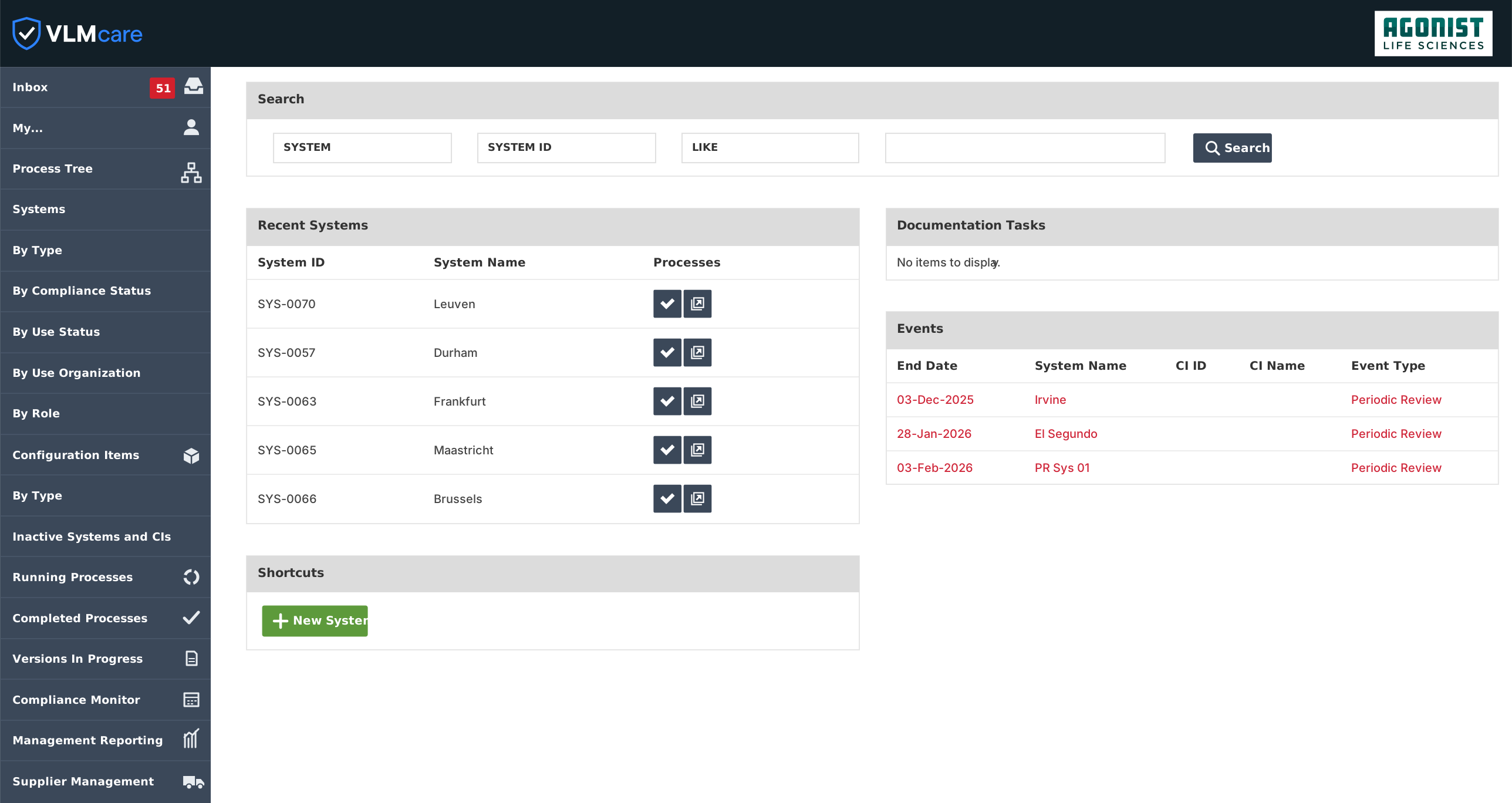
Narrative documents such as SOPs and validation plans still exist and are managed with the same rigor. They make sense as native documents. But the evidence layer is just a view of the data already in VLMcare.
Going paperless means breaking free from the physical aspects of paper as well as escaping the underlying mental model of a document-centric workflow. Don’t just evolve the medium — also evolve the thinking. VLMcare is the system of choice for those moving to the next generation of validation thinking.